How BD Rowa uses AI video to train 300+ technicians globally
We interviewed Udo Weller, part of the Learning and Development team at BD Rowa™, a business unit within Becton Dickinson (BD). He shared how his team uses Synthesia’s AI video platform to train over 300 field technicians around the world—ensuring fast, accurate service for mission-critical pharmacy automation systems.
75%
Faster Content Production
300+
Field technicians trained
6+ languages localized
including German, French, Italian, Spanish, Japanese.

BD Rowa™ delivers advanced pharmacy automation and robotics solutions that support medication safety and efficiency in over 15,000 pharmacies and hospitals worldwide, helping healthcare teams improve patient care and operational performance.
Industry Context
In the medical device and pharmacy automation sector, machine downtime can directly impact patient outcomes. Global service teams must be trained to resolve issues quickly and accurately. But traditional documentation—long emails, PDFs, and text-heavy manuals—can be hard to navigate, especially on mobile devices in the field. Localization adds further complexity, often slowing response times and limiting scalability.
The Challenge
Udo Weller leads eLearning for BD Rowa’s global technician network. His small team supported hundreds of field techs and partners across multiple regions—but repeatedly ran into challenges:
- Text-heavy training: Most materials were shared on the internal LMS (Learning Management System) or via email as long PDF documents, making them hard to read—especially on mobile while traveling.
- High stakes: When automation systems go down, pharmacies can’t dispense medication, so timely and correct servicing is essential.
- Language barriers: Creating and translating training into local languages was time-consuming—and limited by what the German-based team could manage manually.
“Much of our training relied on PowerPoint decks or written instructions in our LMS. Urgent and safety-related topics were additionally emailed to technicians directly. It was hard to keep updated and not ideal for teams in the field.” – Udo Weller, Senior eLearning Specialist
The Solution
With Synthesia, BD Rowa completely reimagined how they train field technicians and support pharmacy partners:
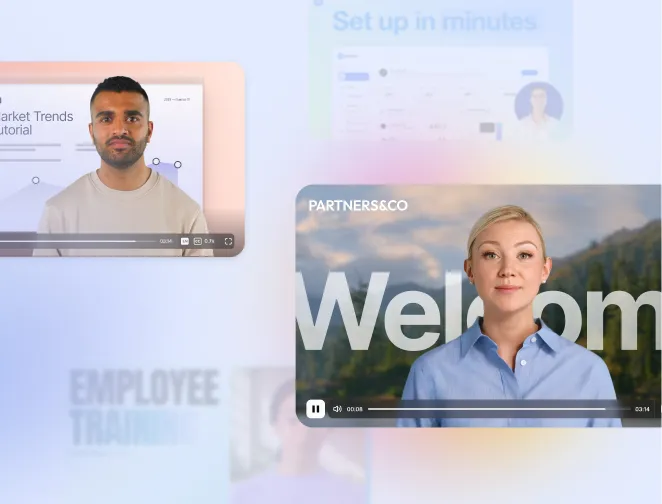
- AI video creation: The team transformed Word, PDF and PowerPoint content into professional training videos with voiceovers, avatars, and visuals—without needing a production team.
- Multilingual localization: Videos are automatically translated into six languages—including Japanese, Spanish, French and Italian—something that wasn’t possible before.
- On-device access: QR codes were added directly to the machines. Customers can scan them to access a library of short, task-specific videos on the spot.
- Mobile-optimized learning: Video-based content is now easily consumable from a smartphone—ideal for techs who are on the move and often have limited downtime.
“Now technicians just access our BD Learning Center and watch a short video in their own language—it’s so much easier.” – Udo Weller, Senior eLearning Specialist
The Results
Now, the Learning and Development team at BD Rowa™ is equipping over 300 global technicians with faster, clearer, and localized training—helping ensure critical pharmacy automation systems stay up and running.
- Up to 75% faster video production: Reduced for example from over 10 hours to just 3 hours per training video.
- Real-time mobile support for technicians: Search in the Learning Center for a specific topic to watch short, localized video guides—eliminating the need to dig through long email instructions or PDFs in the field.
- Multilingual training at scale: Content now automatically localized into 6+ languages. For the first time, teams in Japan were able to clearly understand the training—something that wasn’t possible with previous methods.
- Higher LMS engagement: Technicians now actively use BD’s Moodle-based LMS to find and complete short, targeted video content—improving recall and completion rates.
- Improved service response for critical equipment: Faster, more accessible training supports quicker repairs—minimizing machine downtime and its potential impact on patient care.